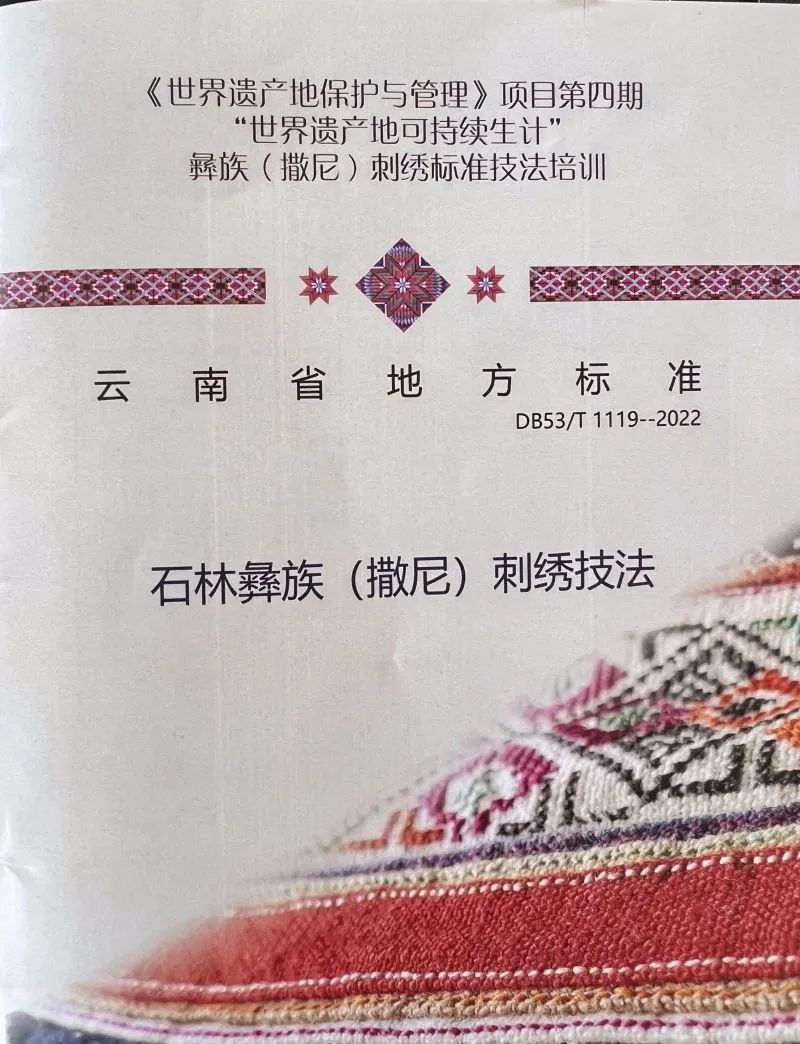
云南省地方标准《石林彝族(撒尼)刺绣技法》培训班成功举办2023年7月22至23日,在联合国教科文组织-中国青少年发展基金会梅赛德斯-奔驰星愿基金“中国世界遗产地保护和管理”项目四期(2021-2024年)“石上彝绣”可持续生计试点活动框架下,云南省地方标准《石林彝族(撒尼)刺绣技法》培训班成功举办。为期两天的培训班旨在推广普及《石林彝族(撒尼)刺绣技法》,该标准是目前云南省第一个以当地少数民族传统技艺制定的标准,其实施与推广对于加强刺撒尼绣技艺、提高当地经济收益具有里程碑式的意义。《石林彝族(撒尼)刺绣技法》© 石林风景名胜区
Shilin Yi
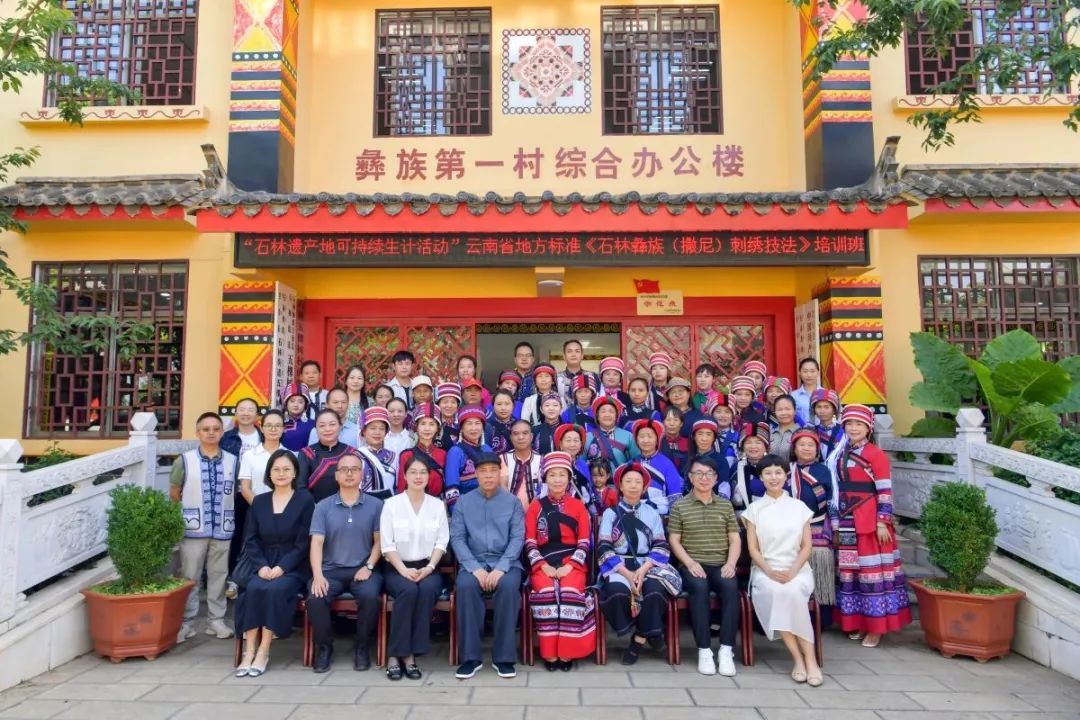
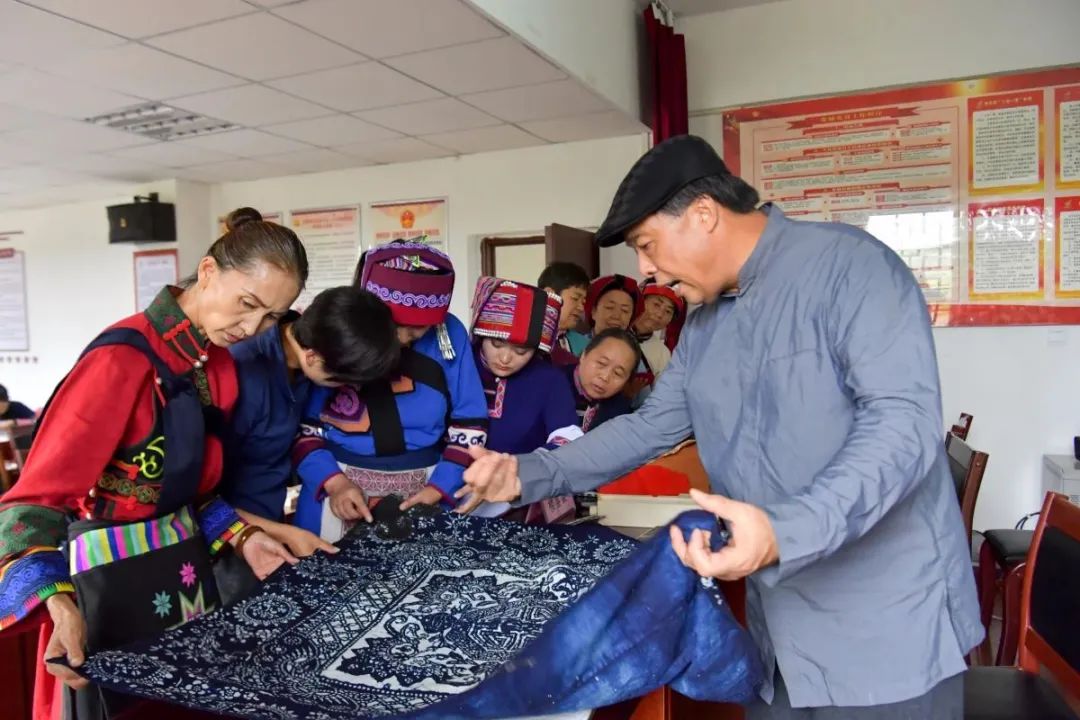
(Sani) Embroidery Products Standards © Shilin Scenic and Historic Are Management Bureau此次培训班面向石林世界遗产地特级至三级保护区的青年人员(45岁以下)展开,共计40人(90%女性)参培。此次培训注重对《彝族(撒尼)刺绣》图谱中刺绣文化的解读,帮助从业者们在掌握刺绣技法的同时,掌握刺绣图样背后的文化。通过现场教学的方式,授课专家带领参培人员对当下前沿的纤维艺术、软装市场与石林刺绣的创新融合进行了深度交流和探索,结合新的理念与市场,探寻撒尼刺绣产品的多方向出路。Workshop group photo © Shilin Scenic and Historic Are Management Bureau
授课专家与撒尼刺绣从业者们讨论刺绣图样 © 石林风景名胜区Discussing the embroidery patterns to
embroiders © Shilin Scenic and Historic Are
Management Bureau
未来,项目将与多方合作伙伴携手,持续助力石林遗产地相关可持续生计能力建设发展工作,将文化传承和世界遗产地居民生计紧密结合,进一步探索自然和文化遗产、物质和非物质文化遗产的协同效应,促进可持续发展。

2007年云南石林作为中国南方喀斯特的一部分列入世界遗产名录,保存和展现了最多样化的石林喀斯特形态。同时石林拥有丰富绚烂的传统文化遗产,彝族(撒尼)刺绣于2008年列入中国非物质文化遗产名录。自2008年以来,联合国教科文组织持续在石林开展试点活动,包含能力建设、标准制定、意识提升、文化交流等,旨在加强遗产地的保护和管理,以创意振兴传统撒尼刺绣,培育公共文化品牌,推动创意经济的发展。
Yunnan Provincial Shilin Yi (Sani) Embroidery Product
Standards WorkshopOn 22-23 July 2023, within the framework
of UNESCO-China Youth Development Foundation Mercedes-Benz Star Fund
“Conservation and Management of World Heritage Sites in China” Project Phase IV
(2021-2024) “Yi Embroidery Grown out of Stone Forest” sustainable livelihood
pilot activity, Yunnan Provincial Shilin Yi (Sani) Embroidery Product
Standards Workshop was successfully organized. The 2-day workshop aimed
to promote and popularize the Shilin Yi
(Sani) Embroidery Product Standards, which currently is the first standard formulated in Yunnan Province based on the traditional artisanal handicraft of the province’s local
ethnic minority. The implementation and promotion of these product standards are
significant milestones in the process of reinforcing the embroidery skills for
economic benefits.The workshop attracted a total of 40
people under the age of 45 (90% female) in the third-level to special-level protection
areas of Shilin World Heritage site. Focusing on the interpretation of the Atlas of Yi (Sani) Embroidery Patterns,
the workshop helped practitioners deepen the knowledge about Yi (Sani)
embroidery patterns while mastering embroidering techniques. Through onsite
learning, the trainees conducted in-depth exchanges and explorations on the
innovative integration of the current cutting-edge fiber art, upholstery and
Shilin embroidery for new products. By combining new ideas and markets, the
trainees explored multi-directional paths for Sani embroidery.In collaboration with multisectoral
partners, the project will continue to support the development of sustainable
livelihood capacity for residents in Shilin World Heritage site through the
safeguarding and transmission of their culture, with a view to further discover
dynamic synergies between natural and cultural heritage, tangible and
intangible heritage, and promote sustainable development.
In June 2007, the stone forest of Shilin in Yunnan Province
was inscribed to the World Heritage List as part of South China Karst,
preserving and displaying the most diverse stone forest karst forms. Shilin is
also home to abundant and diverse traditional cultural heritage. Yi (Sani)
embroidery was inscribed as a national living heritage in 2008. Since then, UNESCO
has continued to carry out pilot activities include capacity building, standard
setting, awareness raising, and culture exchanges to reinforce conservation and
management among World Heritage sites, revitalize traditional Sani embroidery
through innovation, foster public culture brand, and promote the development of
creative economy.